Have you ever delivered exactly what a client asked for—only to hear, “This isn’t what I expected”?
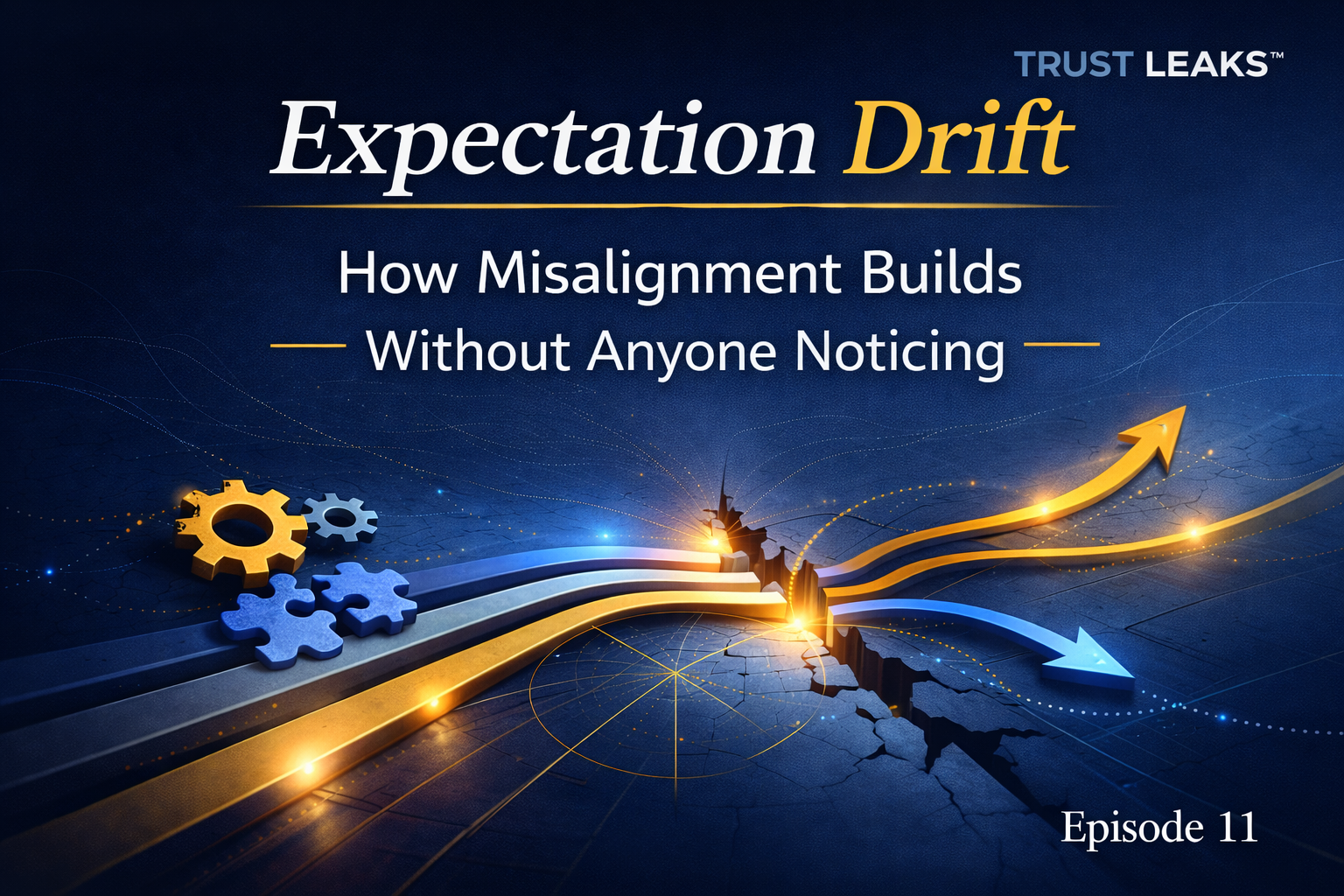
If so, you’re not dealing with poor execution. You’re dealing with expectation drift—one of the most common and overlooked reasons trust breaks down in client relationships.
Expectation drift happens when two parties believe they agreed on the same outcome, but define success differently in their own minds or within their teams. No one is wrong. Nothing malicious occurred. Yet the result still feels like a miss.
And that’s where the problem begins.
In growing businesses, especially those generating between $250,000 and $5,000,000 annually, speed becomes a priority. Deals move quickly. Projects start fast. Conversations feel clear enough to proceed. In that speed however, clarity is often assumed instead of confirmed.
Expectation drift typically comes from three sources.
First, assumptions replace clarity. When something feels obvious, it often goes undefined. Both sides believe they are aligned, but neither has actually verified that alignment.
Second, vague definitions of “done.” Words like strategy, support, implementation, or ongoing sound clear—but mean very different things to different people. Even within the same team, definitions can vary.
Third, speed. Fast-moving businesses prioritize momentum. Alignment conversations get shortened or skipped altogether. And expectation drift quietly takes hold before execution even begins.
Where does this show up most?
Scope discussions are a major one. Clients assume certain services are included, while teams assume they are not. Timeline expectations are another. Clients expect speed, while teams expect process. Communication frequency also creates friction—clients expect proactive updates, while teams assume silence means everything is fine.
At first, this feels like a communication issue.
But over time, it becomes a trust issue.
Clients begin to feel misunderstood. Teams feel like expectations are shifting. Words like “scope creep” start appearing. And even when the work is technically correct, the relationship begins to erode.
That’s why expectation drift is one of the earliest indicators of trust breakdown in a business.
The good news is that it’s also one of the easiest to prevent.
There’s a single question that collapses ambiguity almost instantly:
“What does done look like?”
When both sides define what done means, several things become clear at once:
- The deliverable
- The timeline
- What’s included
- What’s not included
- What success actually looks like
This question forces alignment before execution begins.
And that’s the difference between clients who feel satisfied—and clients who return, refer, and trust you long-term.
Listen to the Full Episode
To hear the full discussion, listen to Trust Leaks™ Podcast – Episode 11: Expectation Drift: Why Clients Feel Misaligned (Even When You Did Everything Right) on Apple, Spotify or YouTube.
If expectation drift is showing up in your business, it’s often connected to other areas where trust can quietly break down.
You may also want to explore:
- Ownership Leaks: When responsibility is unclear and work falls through the cracks
- Communication Leaks: When updates, assumptions, or silence create confusion
- Follow-Through Leaks: When commitments aren’t consistently completed
Each of these areas connects back to how expectations are set, communicated, and executed. Thus making them critical to long-term client trust and retention.