

A client may have received the information and still feel unsure.
Communication is not complete just because you sent the answer. The client needs the right information at the right time, in the right place, with enough detail to take action.
When one of those pieces is missing, questions increase.
The client may start to wonder:
Did I miss something?
Are we still on track?
What am I supposed to do now?
That quiet uncertainty can create a trust leak.
What Do Repeated Client Questions Mean?
Repeated questions are useful data. They often point to a gap in one of four areas:
Expectation: The client does not fully understand what should happen.
Timing: The information arrived too early or too late.
Ownership: The client does not know who is responsible for the next step.
Visibility: The answer exists, yet it is hard to find.
Sometimes the client is not looking for new facts. They are looking for reassurance. They want to know the project is moving, the timeline still holds, and they have not missed anything important.
How Do Repeated Questions Hurt a Business?
One quick reply may take only a minute or two. Many small replies can take a large bite out of your day.
Repeated questions cost time because you keep explaining the same information.
They cost focus because each message pulls you away from deeper work.
They can reduce client confidence because the client wonders why the process feels unclear.
They also make growth harder. When every answer has to come from you, you become the only source of clarity.
A confusing process can even affect referrals. Clients may love the final result and still remember that the experience felt harder than expected.
Five Ways to Reduce Repeated Client Questions
1. Share information near the moment of action
Do not give clients every detail at the start and expect them to remember it weeks later.
Tell them what is happening now, what they need to do next, and what they do not need to worry about yet.
2. Make the next step easy to see
Use clear lines such as:
Your next step is…
What I need from you is…
No action is needed from you right now.
I will follow up on Friday.
Clear language removes guesswork.
3. Create one home for key information
Choose one main place for current details. It may be a client portal, shared document, checklist, project board, or recap email.
The client should always know where to look first.
4. Send short recaps
After an important call or decision, send a simple summary.
Include what was decided, who owns each action, and what happens next.
This also protects against expectation drift, which happens when time passes and people remember the original plan differently.
5. Track repeated questions
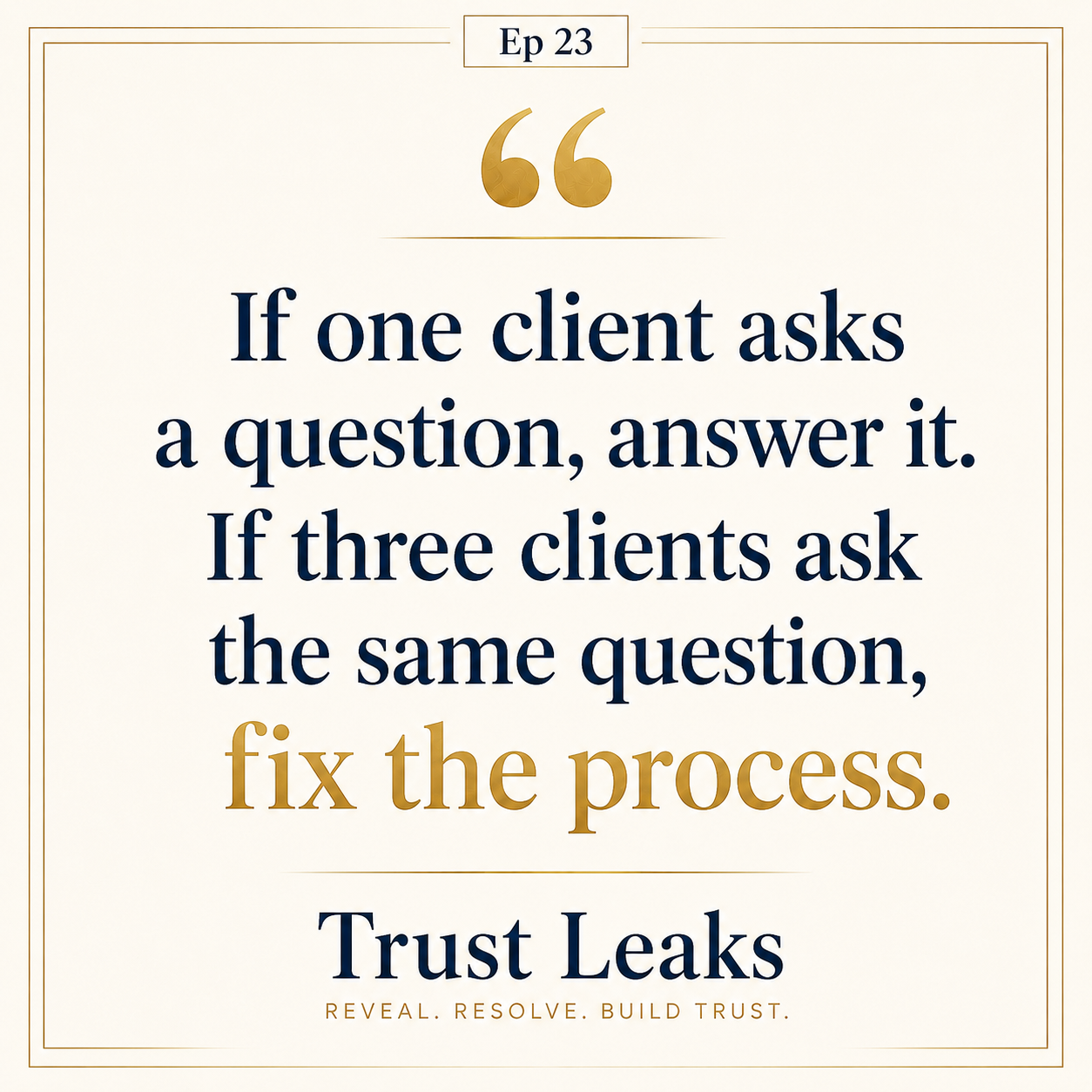
If one client asks a question, answer it.
If several clients ask the same question, improve the process.
Add the answer to the right step. Create a reminder. Update your template. Clarify the handoff.
The Goal Is Better Questions
The goal is not to stop clients from asking questions.
The goal is to reduce questions caused by unclear expectations, missing next steps, hidden information, or fuzzy ownership.
When clients know what is happening, what they need to do, and where to find answers, they feel more confident.
That confidence strengthens trust.
The next time a client asks something you already answered, pause before blaming the client.
Look at the experience.
The question may be showing you exactly what your process needs next.
If you are wondering where trust may be slipping through the cracks in your own business, take the complimentary Trust Leaks™ Diagnostic at https://TrustLeaks.com.
Listen to the Full Episode
To hear the full discussion, listen to Trust Leaks™️ Podcast – Episode 23: Why Do Clients Keep Asking Questions You Already Answered? on Apple, Spotify or YouTube.