
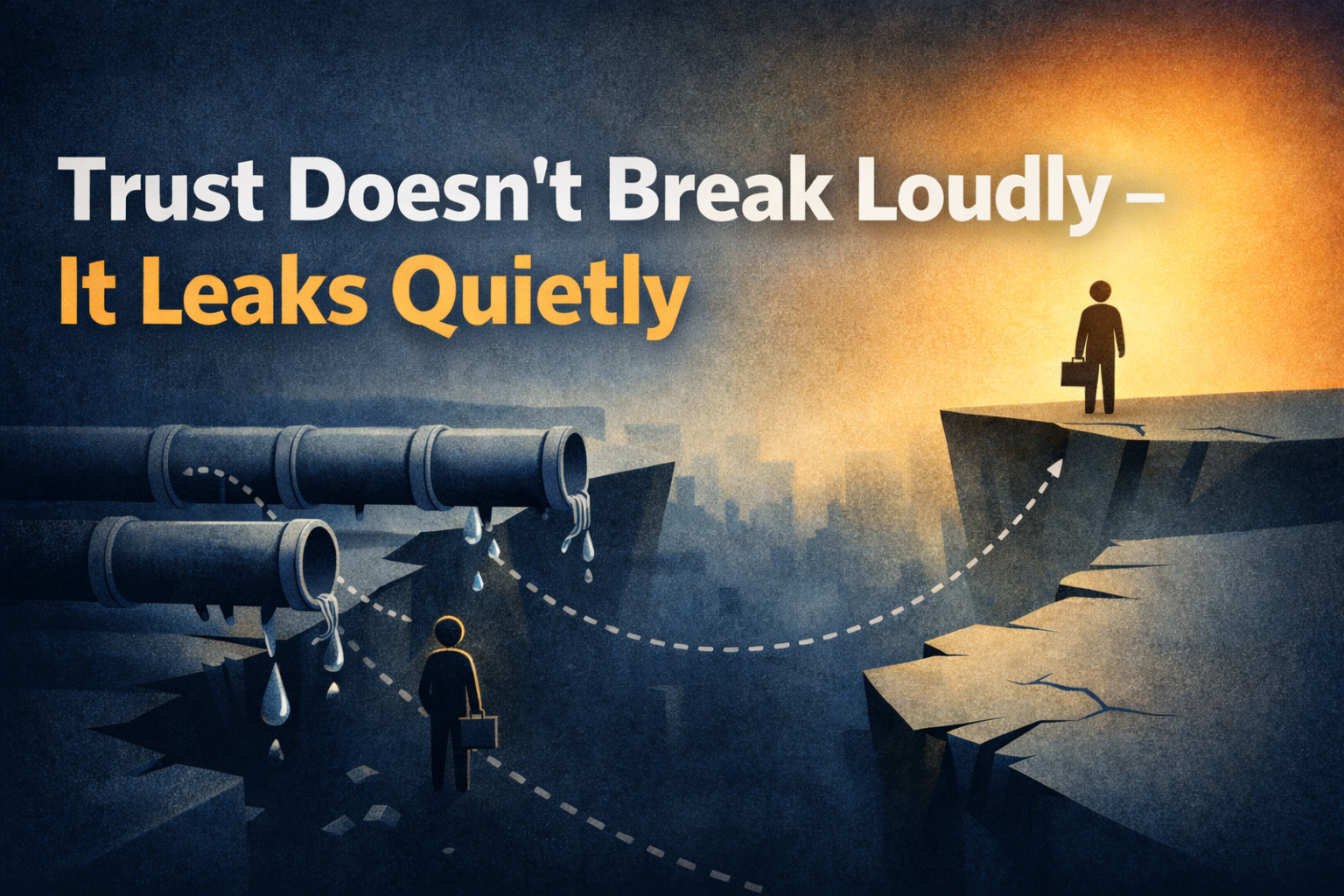
Many businesses believe they have a retention problem.
Clients sign on. Work begins. Progress is made. And yet engagement fades, renewals hesitate, and referrals never quite materialize. From the outside, it looks like a growth issue or a delivery issue.
What’s often missing isn’t effort.
It’s trust.
This breakdown usually happens after the sale, during the first 90 days, when trust is either reinforced or quietly weakened.
Traction creates momentum, but momentum does not automatically create trust. Early wins can feel reassuring for both the client and the team delivering the work. That initial confidence can be misleading. Teams relax. Check‑ins become less intentional. Silence is interpreted as satisfaction.
That’s where trust begins to quietly leak.
The first 90 days of a client relationship form what I call the 90‑day window of trust. During this period, clients are deciding—consciously or not—whether they made the right decision. They’re asking themselves questions that rarely get spoken out loud: Do they really understand me? Are they paying attention? Is this going the way I expected?
When businesses presume instead of validate, trust erodes.
Quiet clients aren’t always happy clients. Silence often masks confusion, uncertainty, or overwhelm. Without intentional check‑ins, those concerns remain unspoken until disengagement becomes the only signal left.
Another common trust leak appears in how progress is communicated. Vague reassurance like “everything’s on track” may sound positive, but without clear milestones or visible indicators of progress, clients are left guessing. Clear updates—especially ones that name what’s green, yellow, or red—build confidence even when things aren’t perfect.
Client Success Is an Active Practice (Not Automatic)
Success isn’t automatic just because work is delivered. It’s an active practice that requires shared definitions, clear expectations, and mutual accountability. When success is assumed instead of defined, results feel accidental rather than intentional.
Transitions are another fragile moment for trust.
Clients experience handoffs, not internal workflows. When roles, responsibilities, or timelines aren’t clearly communicated, confusion builds. Confidence fades—not because of poor work, but because the experience feels unstable.
Most clients decide whether they will stay long before renewal conversations ever happen.
Retention isn’t earned at renewal time.
It’s earned in the quiet middle—through small, consistent habits that make clients feel seen, supported, and confident they made the right choice. Trust doesn’t break loudly. It leaks quietly. And when you protect it early, growth becomes far easier to sustain.