
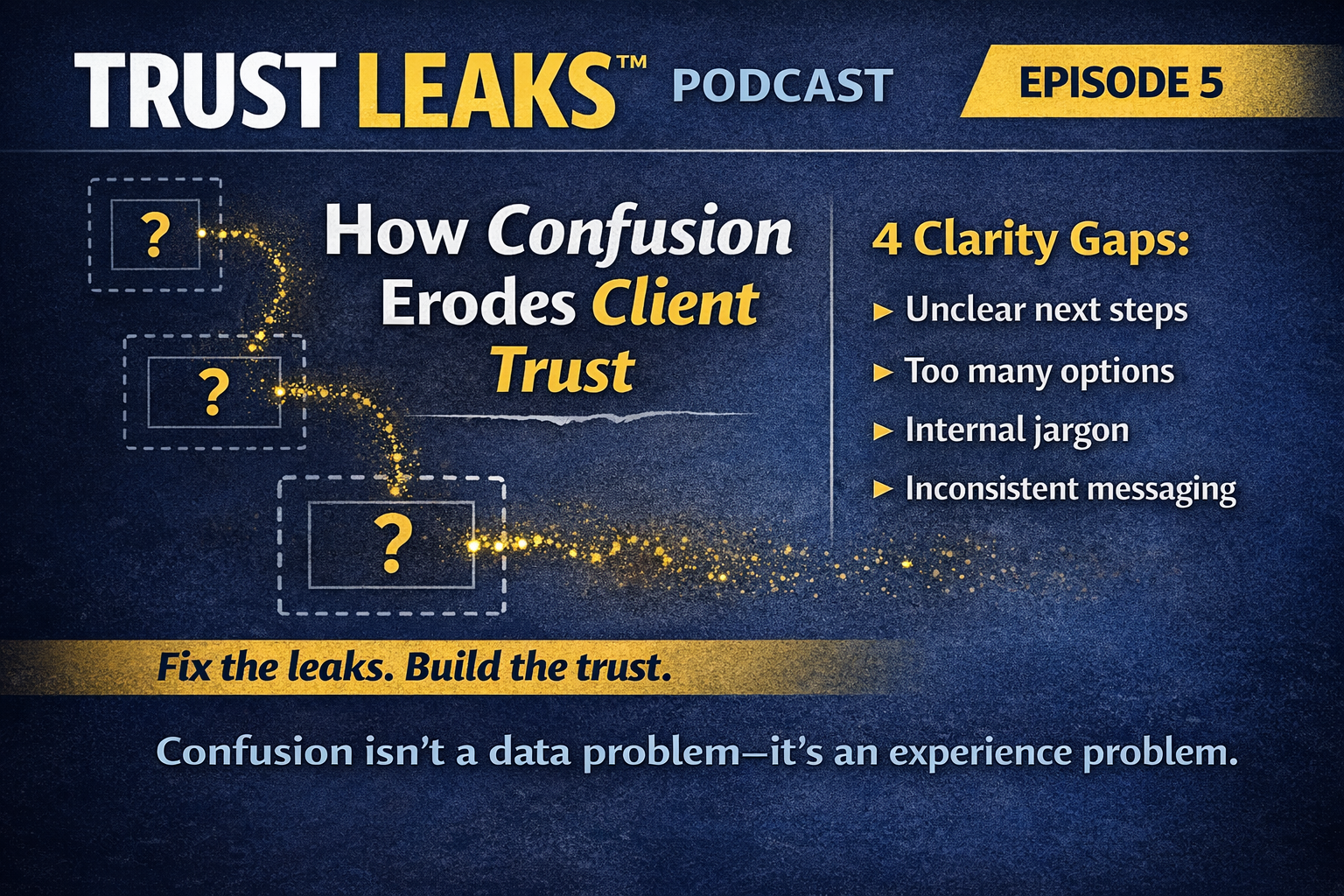
Most business owners don’t think they’re unclear.
They live inside their business. They know their offers, their processes, and their language. What feels obvious to them feels self‑explanatory. And because of that familiarity, it’s easy to assume clients see the same clear picture.
They don’t.
Confusion doesn’t usually trigger complaints. It shows up in quieter, more damaging ways: hesitation, delays, disengagement, and ghosting. Clients stop responding. Prospects stall. Momentum fades.
In this episode of Trust Leaks™, we explored how small clarity gaps quietly erode trust—even in businesses that deliver strong value and have good intentions.
1. Unclear Next Steps
The moment someone becomes a client, clarity matters more than ever. If a client pays and then wonders what happens next—who reaches out, what they should do, or when things begin—uncertainty replaces confidence almost immediately.
Clear, scripted next steps reduce anxiety. They reassure clients that they’re in capable hands. Even something as simple as a confirmation email that outlines exactly what to expect can dramatically strengthen trust.
Clarity here isn’t about over‑communicating. It’s about removing guesswork.
2. Too Many Options
Choice is often positioned as flexibility, but too many options create friction. When clients are faced with endless paths, packages, or decisions, decision fatigue sets in.
Clients don’t hire you for a buffet. They hire you for leadership.
When you narrow options and make clear recommendations, you make it easier for clients to move forward. Clarity in decision‑making builds momentum — and momentum reinforces trust.
3. Internal Language
Every business has shorthand: acronyms, frameworks, and internal terms that feel efficient on the inside. But to clients, that language can feel alienating.
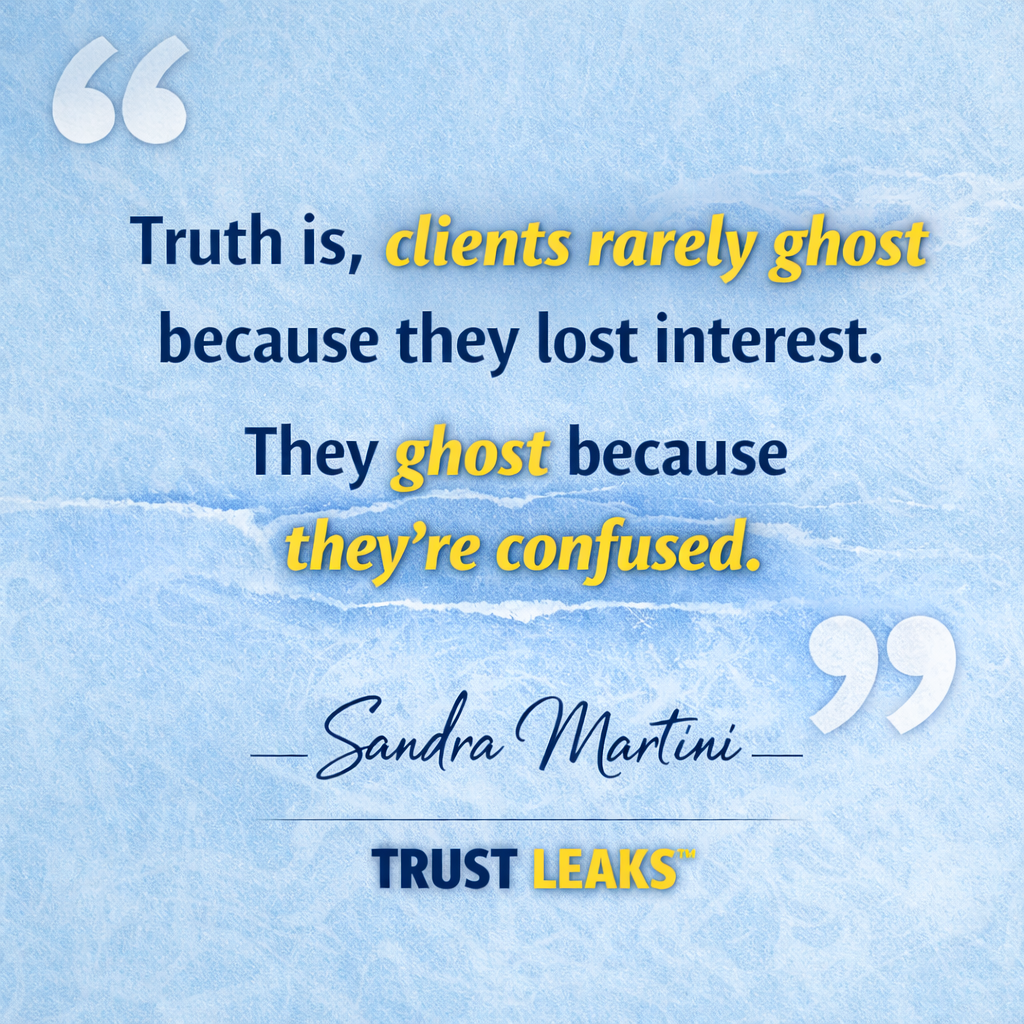
When people don’t understand something, they rarely interrupt to ask. More often, they disengage quietly.
Explaining terms the first time you use them—and checking for understanding—keeps clients feeling included, confident, and supported.
4. Inconsistent Messaging
When your website, emails, sales conversations, and onboarding materials don’t align, clients sense instability. Even small inconsistencies can trigger doubt.
Consistency builds trust because it signals reliability. When clients see the same message reinforced across touchpoints, they feel grounded instead of uncertain.
Clarity Is an Experience
Clarity isn’t something you say once. It’s something your clients experience over time.
It’s reinforced through consistent language, thoughtful guidance, clear next steps, and restrained choices. When clarity improves, trust strengthens. When trust strengthens, momentum follows.
If clients are slowing down or disengaging, the question isn’t “What’s wrong with them?”
It’s “Where might they be guessing?”
I also explored this idea from a broader perspective in a longer, non-promotional piece on Medium, focused on why clarity is less about messaging and more about experience.