
What if building trust did not require posting constantly, chasing every platform, or trying to be everywhere at once?
That is the idea behind Episode 20 of Trust Leaks.
Most episodes focus on where trust breaks down. The missed follow-up. The confusing process. The website that says one thing while the client experience says another.
This episode flips the conversation.
Instead of looking at how trust leaks, we are looking at how trust builds.
And one of the quietest ways to build trust is through a simple content system.
Not louder content.
Not more frantic content.
Why content builds trust
Content builds trust when it helps people understand how you think, what you value, and how you solve problems.
It gives people a way to experience your expertise before they hire you, buy from you, refer you, or reach out.
That matters because trust is rarely built in one dramatic moment.
It is usually built through repeated small signals.
A helpful podcast episode.
A clear blog post.
A useful email.
A short clip that names a problem someone has been feeling.
A resource that helps them take one next step.
Each piece may feel small on its own. Together, they create credibility.
One useful idea can become many trust-building touchpoints
In Episode 20, I used the Trust Leaks podcast itself as the example.
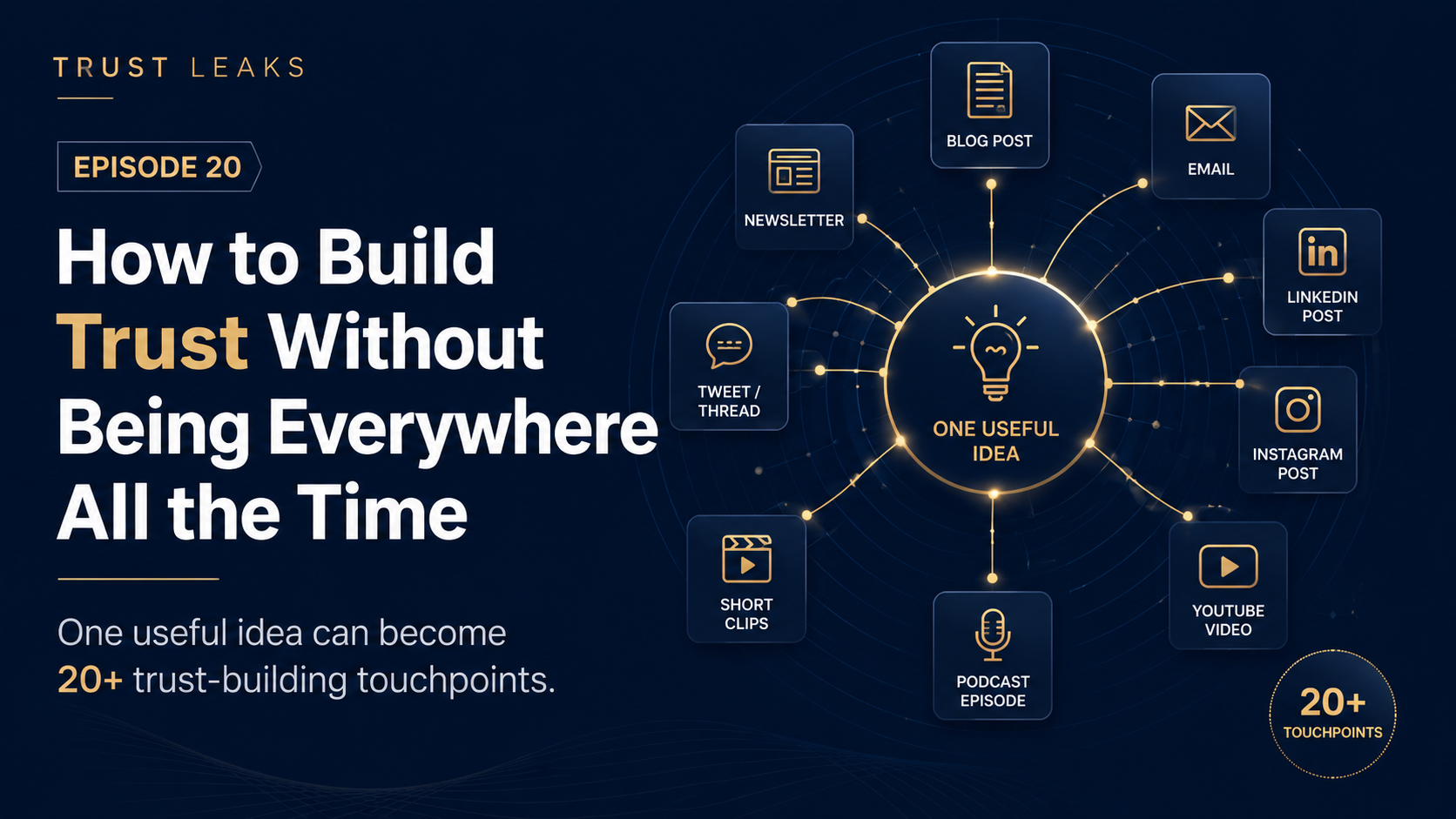
Each episode starts as one recorded conversation or teaching point. From there, it becomes:
- A YouTube video
- Podcast audio
- Apple/Spotify/Amazon/Audible show notes
- A blog article
- A Medium article
- An email to my list
- Social posts for LinkedIn, Facebook, Instagram, X, and Pinterest
- Quote graphics
- YouTube Shorts
- Reels
- Descriptions and captions for each short-form clip
That means one episode can become 20+ trust-building touchpoints.
Not 20 random posts.
Not 20 copies of the same thing pasted everywhere.
Twenty different ways someone might discover, revisit, understand, or act on the idea.
Why shorter content often works better
Shorter content can be easier to consume.
A 30-minute episode may be valuable, yet someone might save it for later because they feel they need a full block of time.
A 10 to 15-minute episode is different.
Someone can listen in the car, during a short break, while cooking, or between meetings.
That matters because trust-building content should not only be useful. It should be usable.
When your content is easier to consume, it is easier for people to engage with it.
YouTube show notes are part of the trust experience
YouTube is not just a place to upload the video and walk away.
The description matters.
Timestamps matter.
Links and resources matter.
When someone lands on your video, they are quietly asking:
Is this worth my time?
Can I find what I need?
Does this person understand the topic?
Is this organized?
Can I trust this experience?
Timestamps help people jump to the section they need. Clear descriptions help them understand the value of the episode. Resource links give them a natural next step.
All of those details are trust signals.
Repurposing is not repeating
Repurposing content does not mean saying the same thing everywhere.
It means taking one strong idea and adapting it to fit different places, different attention spans, and different audience behaviors.
A blog post may go deeper.
A LinkedIn authority post may make one sharp point.
A quote graphic may highlight a memorable line.
A YouTube Short may pull out one quick insight.
An email may invite someone to listen or watch because the topic connects to a problem they are experiencing.
The core idea stays consistent. The format changes.
That is how content becomes both efficient and valuable.
The real goal: help people take one next step
The point of a content system is not just visibility.
It is usefulness.
Each episode of Trust Leaks is designed to help business owners spot one issue, understand why it matters, and take action.
The goal is not to overwhelm people with an hour of ideas they will never implement.
The goal is to give them something they can actually use.
That is also why the Trust Leaks Diagnostic exists.
It gives business owners a simple way to identify where trust may be quietly leaking in their business and where to begin.
How to start building trust with your own content system
You do not need a large team or complicated setup to start.
Begin with one useful piece of content.
Then ask:
Can this become a blog post?
Can it become an email?
Can I pull one quote from it?
Can I create one short clip or short post?
Can I link it to another related resource?
Can I give people one clear next step?
The goal is not to create more for the sake of more.
The goal is to make your best thinking easier to find, easier to understand, and easier to act on.
Trust builds quietly
Trust often grows before someone ever speaks to you.
It grows when they watch how you show up.
It grows when your content answers a question they had.
It grows when your systems make things easier.
It grows when your follow-through feels consistent.
A simple content system can help you build that trust without being obnoxious, overwhelming, or constantly “on.”
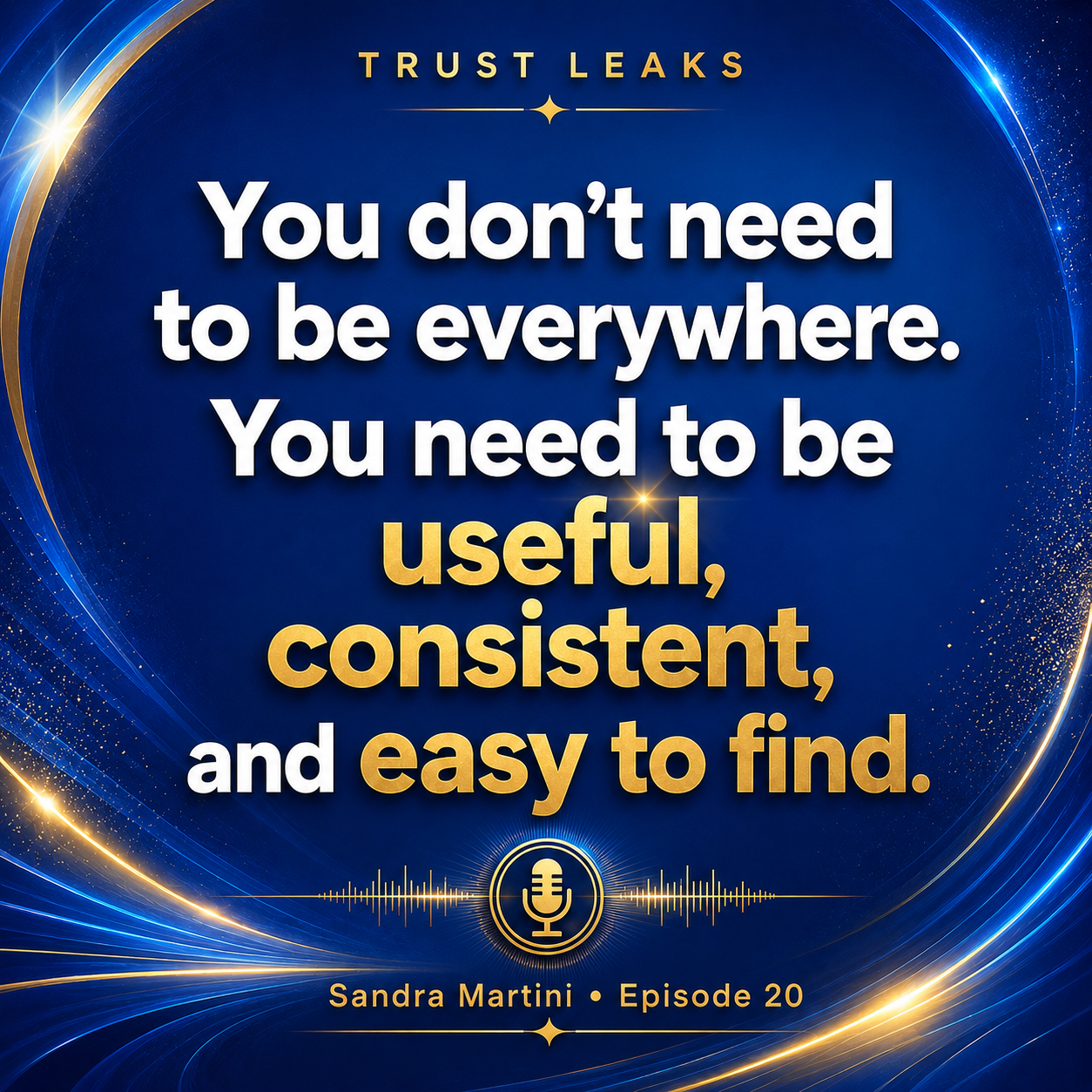
You do not need to be everywhere.
You need to be useful, consistent, and easy to find.
Want to know where trust may be leaking in your business?
Take the free Trust Leaks Diagnostic at https://TrustLeaks.com.