
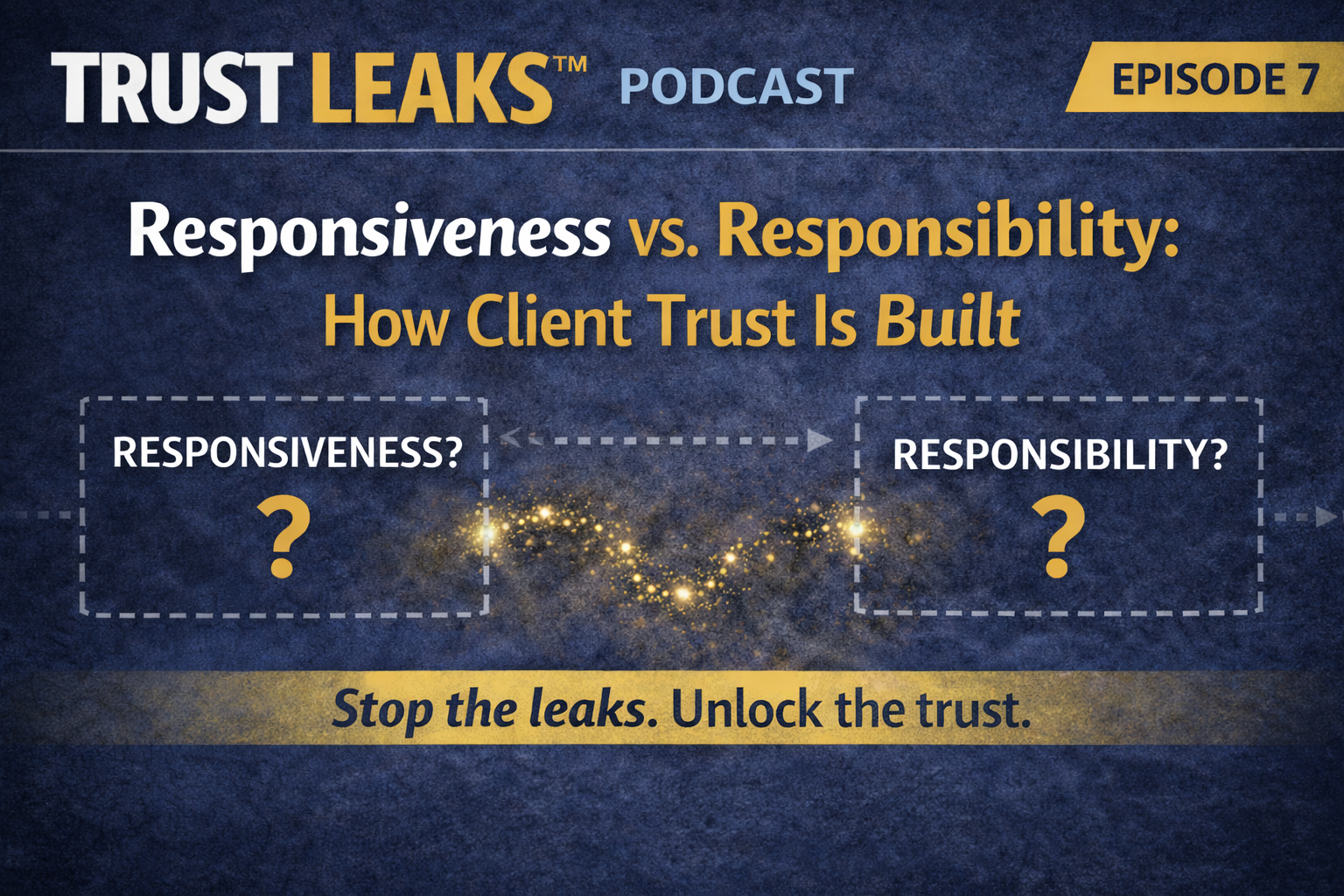
Responsiveness is often treated as the gold standard of great client service.
Emails are answered quickly. Messages don’t sit. Clients know someone is available. On the surface, everything looks right.
And yet, trust can still feel fragile.
Responsiveness alone does not build trust; responsibility does — because trust is created through anticipation, not reaction.
This distinction is at the heart of Episode 7 of Trust Leaks™, where we explore why well‑intentioned businesses can still experience trust erosion even when they’re fast, available, and trying to do the right thing.
Why Responsiveness Isn’t Enough to Build Client Trust
Responsiveness reacts. It answers what’s asked.
Responsibility anticipates. It addresses what hasn’t been said yet.
Most businesses default to responsiveness because it feels helpful and professional. But responsiveness relies on the client to raise their hand, ask the question, or flag the concern.
And that’s where trust quietly starts to leak.
When clients hear, “Just let me know if you need anything,” the burden shifts onto them. They begin to wonder:
- Is this worth asking?
- Am I being difficult?
- Should I already know this?
So they wait. Small concerns go unspoken. Uncertainty grows — not because the business is unresponsive, but because the client doesn’t feel fully supported.
How Responsibility Shows Up in Real Client Experience
Responsibility removes guesswork.
It looks like proactive check‑ins instead of open‑ended offers. Clear next steps without prompting. Updates that explain not just what is happening, but what’s being watched and why.
Responsible communication answers the questions clients haven’t figured out how to ask yet.
It reassures them that someone is paying attention, thinking ahead, and actively guiding the process — not just waiting to respond.
This is the difference between clients feeling helped and clients feeling held.
The Real Cost of Confusing Responsiveness with Trust
Responsiveness prevents frustration.
Responsibility builds confidence.
And confidence is what keeps people from second‑guessing the relationship, the process, or their decision to work with you.
This is why teams can be fast, friendly, and available — and still experience trust erosion. Clients don’t leave because no one answered them. They leave because they spent too much time wondering what was happening next.
Finding the Leak
If you’ve ever thought, “We’re doing everything right — so why does trust still feel shaky?” This is likely where the leak is.
Trust isn’t strengthened by speed alone. It’s strengthened when clients feel guided, supported, and confident without having to ask for reassurance.
That shift — from reacting quickly to leading responsibly — changes how clients experience your business.
And once confidence is built, trust has room to stay.