There’s a particular kind of exhaustion that many entrepreneurs experience, especially lifestyle entrepreneurs trying to build a business without sacrificing their health, relationships, or peace of mind.
It’s the exhaustion of feeling like everything is technically done… while simultaneously feeling like nothing is fully complete.
The email was sent.
The project was delivered.
The task was checked off.
And yet your brain keeps revisiting it.
Did the client get it?
Did the team understand the next step?
Did the deliverable actually land?
Does everyone involved know this is finished?
That lingering uncertainty is often caused by what I call an open loop.
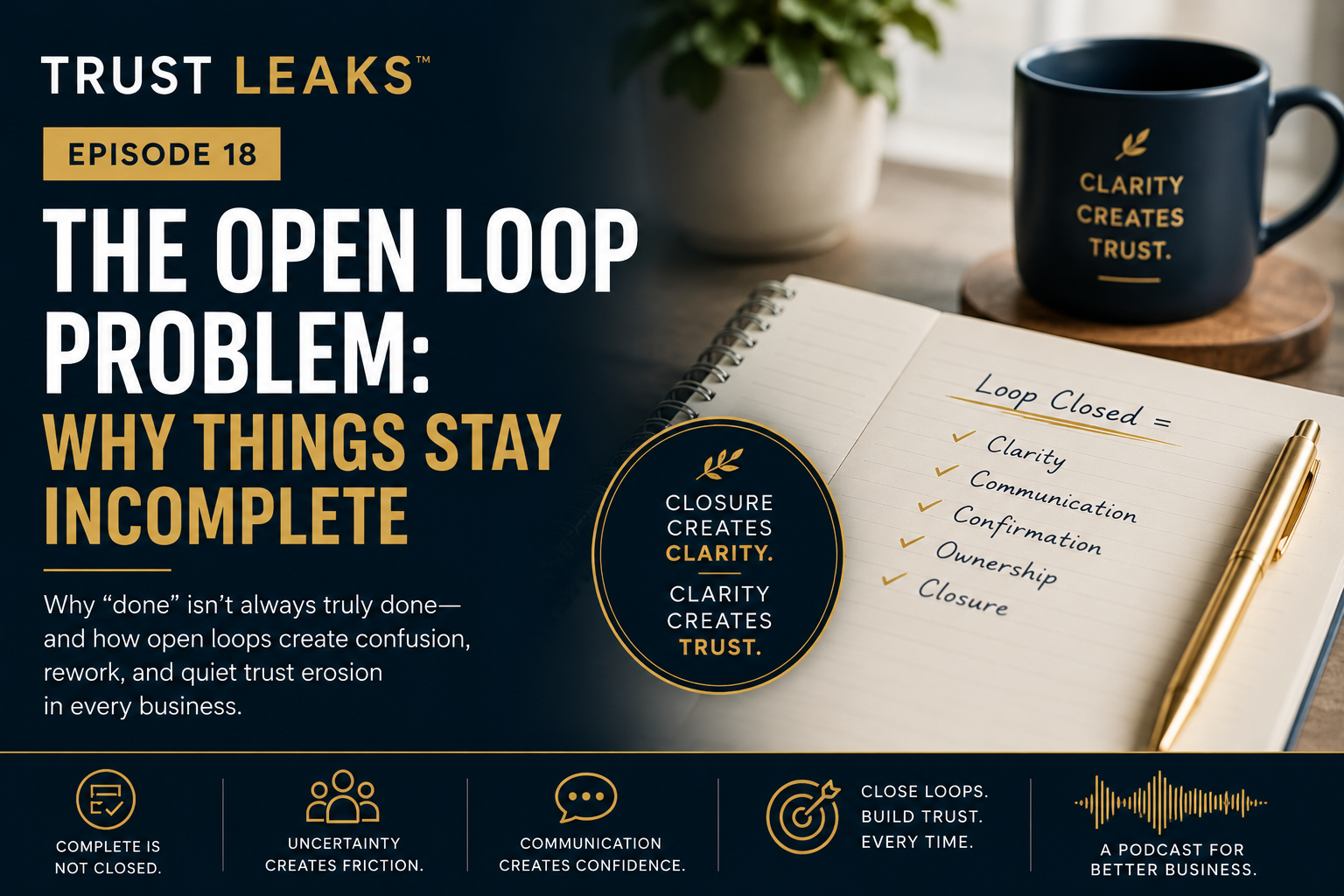
An open loop happens when work is completed without true closure. The task may technically be done, but confirmation, communication, ownership, or alignment is still missing.
And over time, these open loops quietly create operational friction.
This is one of the most overlooked trust leaks inside businesses today.
Most teams define “done” as:
“I completed my part.”
Completion and closure, however, are not the same thing.
Closure means:
• Everyone understands the outcome
• Ownership is clear
• The next step is known
• Confirmation has occurred
• The loop is fully closed
Without that, uncertainty remains.
Clients start following up for updates.
Team members revisit work repeatedly.
Leaders feel forced to double-check everything.
Everyone becomes slightly reactive.
Nothing is technically broken.
But trust still starts eroding.
One of the most common places this shows up is in communication handoffs.
For example, someone completes a task, uploads the file, and moves on without telling anyone. The work exists. But because no one confirmed completion, the rest of the team assumes there’s a delay.
That’s not a productivity issue.
It’s a closure issue.
And these issues compound quickly.
I recently reviewed virtual assistant timesheets for a business owner and discovered some tasks were being touched seven, eight, even nine separate times. Not because the team lacked skill or motivation — but because the loops were never fully closed.
That means open loops don’t just create stress.
They create financial leakage too.
One of the simplest operational upgrades you can make is changing the question your business asks.
Instead of:
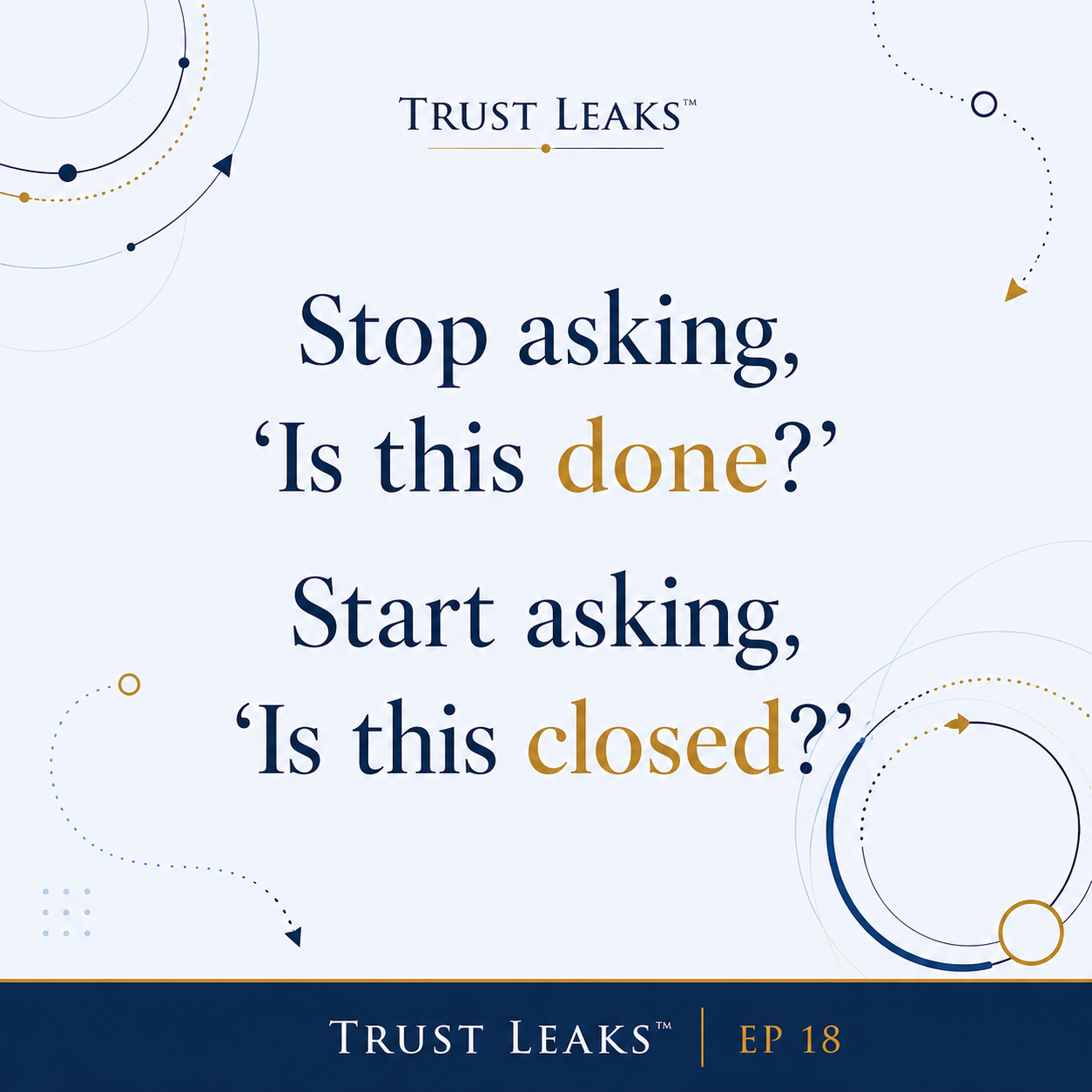
“Is this done?”
Start asking:
“Is this closed?”
That small shift changes how teams communicate, how projects move, and how trust is built internally and externally.
Closing loops doesn’t require complicated systems.
Often it’s simply:
• Defining what “done” actually means
• Building in confirmation steps
• Assigning ownership of closure
• Communicating outcomes clearly
That’s it.
And ironically, taking those extra few seconds often saves hours of backtracking, clarification, and unnecessary follow-up later.
If this topic resonates, you may also enjoy an earlier Trust Leaks™ episode:
“Experience Leaks: The Hidden Breakdown Costing You Clients, Referrals, and Trust.”
Because most trust leaks don’t come from massive failures.
They come from small moments of incompletion that slowly stack over time.
Open loops create doubt.
Closed loops build trust.
Discover where your business is leaking trust. Take the complimentary Trust Leaks™ Diagnostic at https://TrustLeaks.com
Listen to the Full Episode
To hear the full discussion, listen to Trust Leaks™️ Podcast – Episode 18: The Open Loop Problem: Why Things Stay Incomplete on Apple, Spotify or YouTube.